
People often talk about rest as if it begins automatically when work stops. In practice, the end of a meeting may lead to messages, errands, family responsibilities or planning for the next day. A free hour can disappear without feeling restorative.
A massage appointment cannot repair an unsustainable schedule. It can, however, create a specific period in which one person is not required to produce, organise or respond. The value lies in the boundaries of the appointment, not in a promise that one session will fix exhaustion.
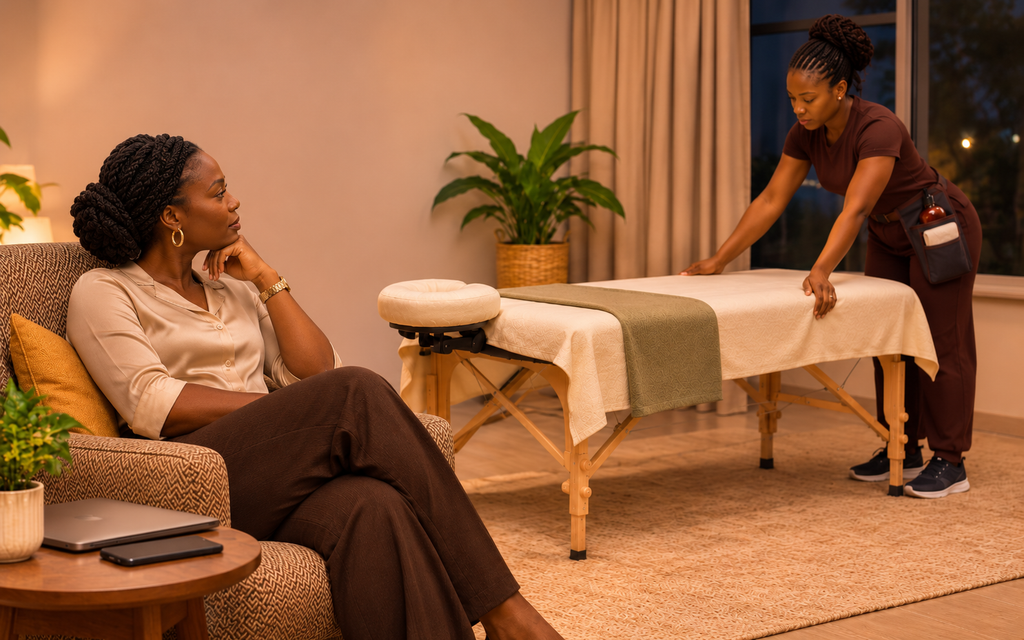
A client scenario
The client is a busy professional who says they cannot remember the last time they properly rested.
In the scenario, the therapist does not diagnose burnout or assume that massage is the answer. She asks what “rest” means to the client, which parts of the week feel most demanding, what pressure they prefer, and whether there are health concerns or current symptoms that affect suitability.
The client describes moving from early calls to a full workday, then handling personal tasks late into the evening.
The detail explains why the client wants a pause, but it does not create a medical conclusion. Many reasons can sit behind fatigue or poor rest. Persistent exhaustion, sleep disruption, or other concerning symptoms deserve appropriate clinical attention.
Choosing a realistic goal for the appointment
The client and therapist settle on a modest goal: a quiet, comfortable session with no pressure to talk beyond necessary check-ins. The focus is not “remove all stress.” It is to make the 90 minutes feel coherent and unhurried.
The client chooses Stress Relief Massage and asks for moderate pressure, with attention to the back, shoulders, and feet.
A longer appointment can allow time for position changes and more than one priority without rushing. It should not become an attempt to work on every possible area or to use the strongest pressure because more minutes are available.
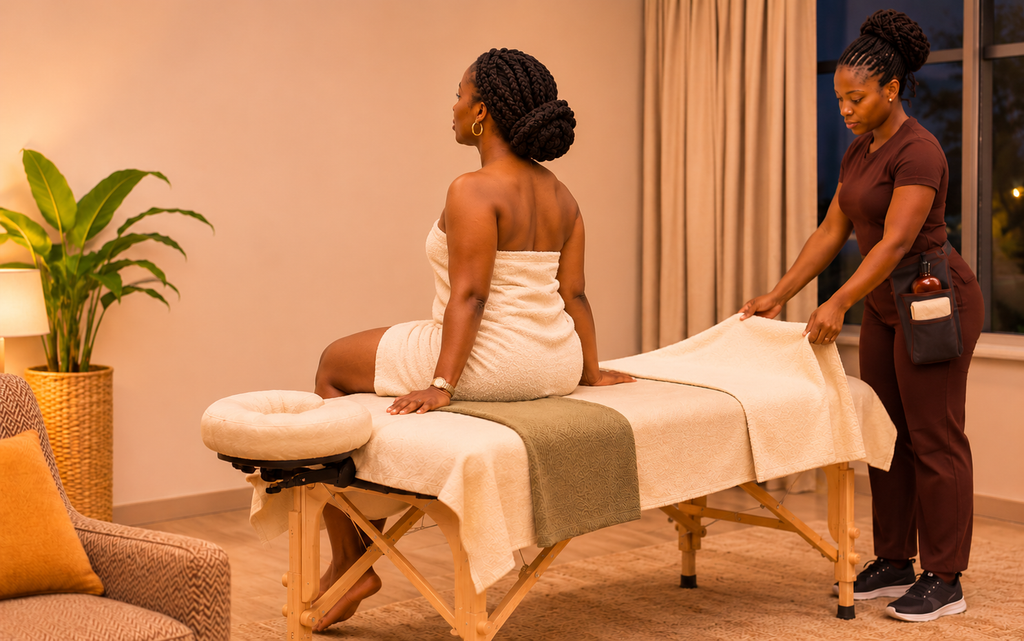
Rest still needs communication
A client who is tired may be tempted to agree to everything so there are no more decisions to make. The therapist can help by offering simple choices rather than a long menu. For example: “Would you prefer quiet or some conversation?” “Is this pressure comfortable?” “Would you like this area included or avoided?”
The client can answer briefly. They can also change an answer. Consent and comfort remain active throughout the session.
Relevant health information still needs to be shared. NCCIH advises people not to use massage to postpone seeing a health care provider about a medical problem. It also notes that individual circumstances can affect whether a mind-and-body practice is safe. A restful intention does not remove the need for suitability review.
Protecting the time around the massage
The appointment starts before the first massage stroke. If the client is replying to messages while the therapist sets up, then plans a call for the minute the session ends, the pause becomes narrow.
A few practical choices can help. Confirm access in advance. Prepare the room. Put necessary items nearby. Decide which notifications can wait. Leave enough time after the session to stand, dress, and return to activity without a sprint.
This is not a perfect-rest checklist. People have responsibilities and interruptions happen. The point is to reduce avoidable friction where possible.
What the therapist can and cannot offer
The therapist can offer attentive massage within the agreed service, adapt pressure and positioning, respect boundaries, and maintain a calm pace. She can explain what will happen and invite feedback.
She cannot diagnose chronic stress, guarantee sleep, prescribe how often a client must book, or claim that massage removes toxins. She also cannot confirm every request automatically. The location, disclosed concerns, suitability, and therapist availability all require review.
In the scenario, the client describes the session as a useful pause and decides to keep the rest of the evening unscheduled.
That is an intentionally restrained ending. A client story does not need a miraculous result. It just needs to show what it looks like to make one appointment clear, bounded, and comfortable.

Requesting a longer rest-centred session
Loving Hands Stress Relief Massage is 90 minutes at ₦70,000. Executive Reset is a separate 120-minute package at ₦200,000 comprising assisted stretching, sauna, and a full-body massage focused on agreed priority areas. The right option depends on your goals, preferences, and suitability, not on the idea that the longest session is always best.
The form at /book/ submits an appointment request. It does not confirm a time or take website payment. Loving Hands reviews location, suitability, and therapist availability before sending direct payment instructions. An appointment is final only after verified payment and written confirmation. Use /contact/ if you want to talk through the options first.
Frequently asked questions
Can massage fix exhaustion from an overloaded schedule?
No. Massage may provide a defined period of rest, but it does not resolve the causes of exhaustion or replace appropriate care.
What if I do not want to talk during the appointment?
You can request minimal conversation. The therapist will still make necessary checks about pressure, positioning, and comfort.
Which longer Loving Hands services are available?
Stress Relief is 90 minutes at ₦70,000, while Executive Reset is a 120-minute stretch–sauna–massage package at ₦200,000. Suitability and fit should be discussed.
Does an online request reserve the appointment?
It starts the review process. Final confirmation comes only after location, suitability, and availability review, verified payment, and written confirmation.
Related reading
- How to Prepare Your Home or Hotel Room for a Massage
- Desk Tension and Simple Ways to Take Movement Breaks
- Choosing a Massage Session for Your Recovery or Relaxation Goals