
Some massage requests arrive with a detailed list: upper back, right shoulder, medium pressure, no work on the feet. Others arrive in one sentence: “I just need to switch off.”
That sentence sounds simple, but it is not a complete session brief. One person may want quiet after a week of constant calls. Another may be tired of making decisions. Someone else may be carrying physical tension but have no appetite for an intense session. The useful starting point is not to assume. Instead, ask what would help the person feel settled and what they do not want.
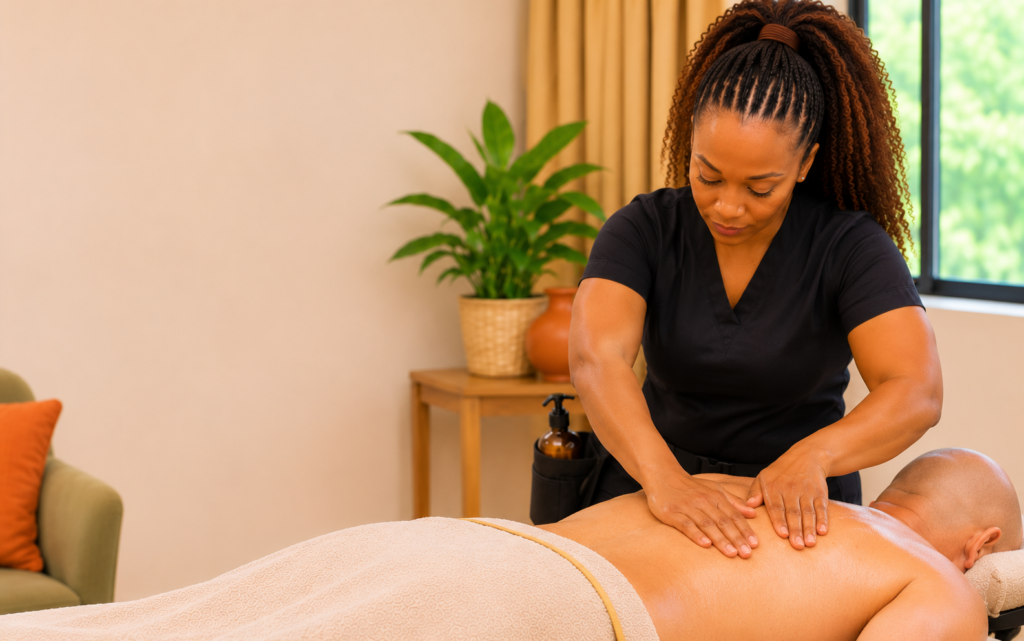
A plausible client scenario
A professional books a mobile appointment after a meeting-heavy week and says, “I just need to switch off.”
In this scenario, the therapist does not immediately translate “switch off” into maximum pressure or complete silence. She asks a few practical questions.
Is there an area that feels especially tired?
Does the client want conversation kept to a minimum?
Is there any health information, recent injury or sensitivity that may affect the session?
What pressure usually feels comfortable?
In this scenario, the client asks for a slow, quiet session with moderate pressure and extra attention around the upper back, shoulders, and hands.
Those details give the session shape without turning it into a medical promise. The aim is not to diagnose why the client feels overloaded. It is to create a clear, comfortable appointment within the therapist’s scope.
“Switching off” is not one technique
A calm session is built from choices. Pace matters. Transitions can be unhurried rather than abrupt. Pressure can remain steady instead of becoming a test of tolerance. The therapist can reduce unnecessary conversation while still checking comfort, positioning and pressure.
The room also matters. For a mobile appointment, the client can choose a suitable space at home, in a hotel or at an office where access has been agreed. A little preparation helps: enough room for the table, a comfortable temperature, reduced interruptions and a plan for what happens immediately after the session.
None of this guarantees that the mind will become blank. Massage is not an on-off switch, and rest cannot be forced. A useful session can simply offer a period in which the client is not answering messages, moving between meetings or making the next decision.
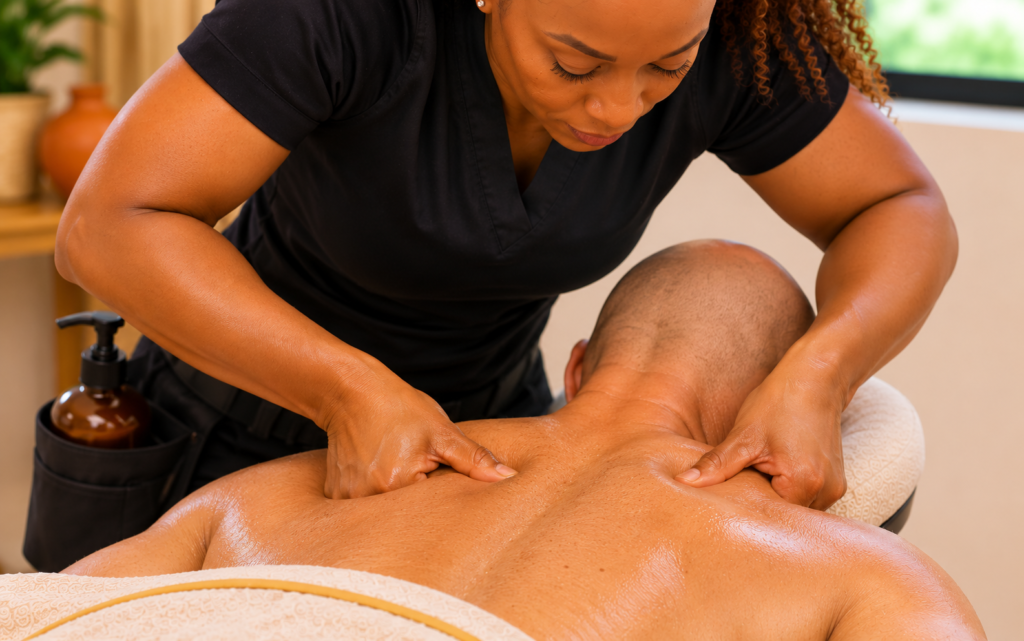
Communication can stay simple
Some clients worry that speaking during a massage will spoil the atmosphere. It will not. A short sentence such as “a little lighter there,” “that position is uncomfortable,” or “I would prefer less conversation” gives the therapist useful information.
The therapist may also check in. That does not mean the session has stopped being restful. Good communication protects the client’s comfort and keeps the work responsive. Silence should never require someone to tolerate pressure, positioning, or touch in places they do not want.
Massage is not risk-free, and suitability depends on the technique and the client’s circumstances. Share relevant health information and ask for pressure, positioning or touch to be changed whenever needed. Health conditions, pregnancy, recent procedures, injuries, medication and other concerns may affect suitability. Relevant information should be shared before the appointment. If symptoms are severe, worsening, unexplained or concerning, clinical advice is more appropriate than trying to use massage as a substitute for care.
A quieter ending is part of the appointment
A rushed finish can undo the practical value of making time to pause. Where possible, the client can leave a small gap after the session rather than stepping straight into a video call. That may mean silencing notifications for a little longer, drinking water because they are thirsty, changing clothes slowly, or simply sitting for a while before returning to the day.
In this scenario, the client chooses to keep the next thirty minutes free and describes the appointment only as a welcome pause; no therapeutic outcome is claimed.
That modest description is enough. A massage does not need a dramatic before-and-after story to be worthwhile. Sometimes the request is for a defined period of attentive, comfortable rest.
Choosing the right Loving Hands session
A person who wants general relaxation may consider Swedish Relaxation. Someone who wants a longer appointment built around rest may ask about Stress Relief. The right choice still depends on the person’s preferences, disclosed concerns, location and suitability.
The online form at /book/ is an appointment request, not an automatic confirmation. Loving Hands reviews the location, suitability and therapist availability before sending direct payment instructions. The appointment is final only after verified payment and written confirmation. If you are not sure which service fits what you mean by “switch off,” use /contact/ and describe the kind of session you are hoping for.
Frequently asked questions
Do I have to talk throughout a relaxation massage?
No. You can ask for minimal conversation, although the therapist will still check comfort, positioning and pressure when needed.
Does “switching off” mean the massage must be very gentle?
Not necessarily. Some people prefer light pressure and others prefer moderate or firm work. Pressure should be discussed and adjusted rather than assumed.
Can massage replace help for ongoing stress or a health concern?
No. Massage can be part of personal care, but it should not delay appropriate clinical or mental-health support for persistent or concerning symptoms.
Is submitting the form a confirmed booking?
No. Loving Hands reviews location, suitability and therapist availability before payment instructions and written confirmation.
Related reading
- Choosing a Massage Session for Your Recovery or Relaxation Goals
- How to Prepare Your Home or Hotel Room for a Massage
- Book