
Deep tissue massage is often described through extremes: the strongest massage, the painful one, or the service that will finally “break up” a stubborn knot or pain. Those descriptions are memorable, but they are not especially useful or complete.
A clearer picture begins with focused work, deliberate pressure, and ongoing communication. It also includes limits. Deep tissue massage is not a diagnosis, not a guarantee of relief, and not a reason to ignore symptoms that need clinical attention.
What “deep tissue” usually describes
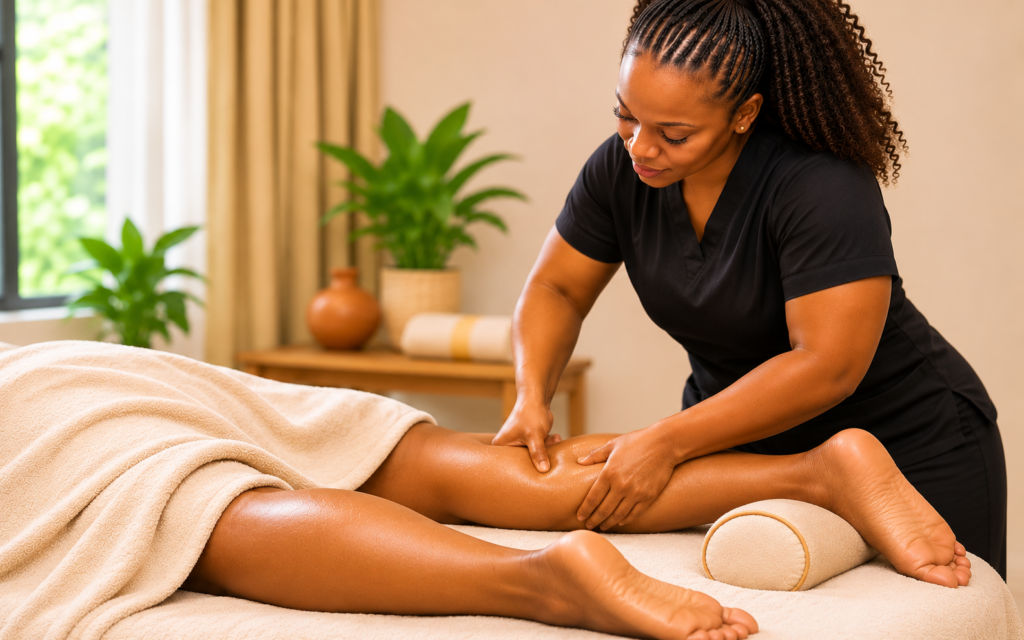
Deep tissue techniques use firmer pressure and slower, more focused work than a light relaxation massage. The techniques are intended to reach deeper muscles or tendons. The exact session still varies by therapist, body area, client preference, and goal.
That means a deep tissue appointment does not have to apply the same force everywhere. The therapist may use broad contact first, work gradually, change the angle or position, and spend more time around selected areas. A shoulder may tolerate one level of pressure while a calf, lower back, or forearm needs another.
The word “deep” describes an approach. It does not require the client to endure the therapist’s full strength.
What it is not: a pain contest
Some clients enjoy firm pressure and find strong sensation satisfying. That preference is valid. What is not useful is treating pain as the only sign that the massage is working.
Sharp, burning, electric, or alarming sensations should be reported. So should numbness, dizziness, or a sense that you are bracing so hard you cannot relax. The therapist can reduce pressure, slow down, reposition you, or move to another area of the body.
Minor soreness can happen after massage, particularly when vigorous techniques are used. Authoritative health guidance also notes that serious adverse effects are rare but possible, with greater caution needed for people at increased risk of injury. This is why “as hard as possible” is not a responsible default.
What it is not: a medical diagnosis
A therapist can listen to your description and notice how tissues feel during massage. They cannot use that experience to diagnose the cause of persistent pain or replace a clinician’s assessment.
An area that feels tight may be influenced by activity, stress, prolonged positioning, previous injury, or something outside the scope of massage. Temporary comfort after a session does not prove which explanation is correct.
If your pain is severe, worsening, unexplained, linked to a recent injury or accompanied by significant swelling, weakness or loss of function, seek appropriate clinical care. Massage should not delay that step.
The health conversation matters
Before a deep tissue session, share relevant health information. This includes recent surgery or injury, medication that affects bleeding or bruising, a history of blood clots, skin infection, fragile bones, pregnancy-related concerns, and instructions from a healthcare professional.
Not every disclosure automatically prevents massage. It may change the pressure, positioning, areas covered or timing. In some circumstances, the therapist may ask for clinical guidance or decline to proceed. Suitability is reviewed rather than assumed.
The NCCIH advises people with medical conditions to consult a healthcare provider before massage in relevant circumstances and warns against using massage to postpone medical care. That boundary supports safer decisions without making every appointment sound alarming.
Deep tissue, sports or Swedish?
Choose based on the reason for the appointment, not only the pressure label.
Deep Tissue may be a useful starting point when you want focused, firm work around areas that feel persistently loaded. Sports Massage may make more sense when the conversation begins with training, a physical event, or repeated physical activity. Swedish Relaxation is designed around a calmer full-body pace and may suit someone who wants to rest rather than concentrate on one demanding area.
There can be overlap. A Swedish session can include pressure preferences. A sports session can include firm pressure. A deep tissue session can slow down and become lighter when your response calls for it. The service name guides the plan but does not remove professional judgement.
What to expect from Loving Hands
Loving Hands offers a 60-minute Deep Tissue Massage for ₦60,000 as a mobile service at agreed homes, hotels, and offices in Abuja. The therapist brings the appointment to the agreed location; Loving Hands does not operate as a walk-in studio.
When requesting a session, explain which areas matter, whether you have had deep tissue massage before, how you respond to firm pressure, and any relevant health information. If your main concern is pain, describe how long it has been present and whether it has been clinically assessed.
Submitting the booking form does not confirm the appointment. Location, suitability, and therapist availability are reviewed first. Direct payment instructions follow an accepted request, and the appointment becomes final after verified payment and written confirmation.
Deep tissue massage can be strong and specific without becoming aggressive. The most useful session is not the one with the highest pressure; it is the one where the pressure, focus, and boundaries make sense for the person receiving it.
Frequently asked questions
Is deep tissue massage the strongest massage available?
It commonly uses firmer, slower, and more focused techniques, but it is not defined by maximum force. Pressure is adjusted by area, goal, and client response.
Should deep tissue massage be painful?
Strong sensation can occur, but sharp, burning, electric, or alarming pain should be reported. You can ask for pressure to be changed at any time.
Can deep tissue massage diagnose or fix persistent pain?
No. Massage does not diagnose the cause of pain or guarantee an outcome. Persistent, severe, worsening, or unexplained symptoms need appropriate clinical care.
How much is a Loving Hands deep tissue massage session in Abuja?
The current Deep Tissue Massage service is 60 minutes for ₦60,000. Location, suitability, and therapist availability are reviewed before confirmation.
Related reading
- Choosing a Massage Session for Your Recovery or Relaxation Goals
- What to Expect from a Mobile Massage Appointment in Abuja
- How to Prepare Your Home or Hotel Room for a Massage