
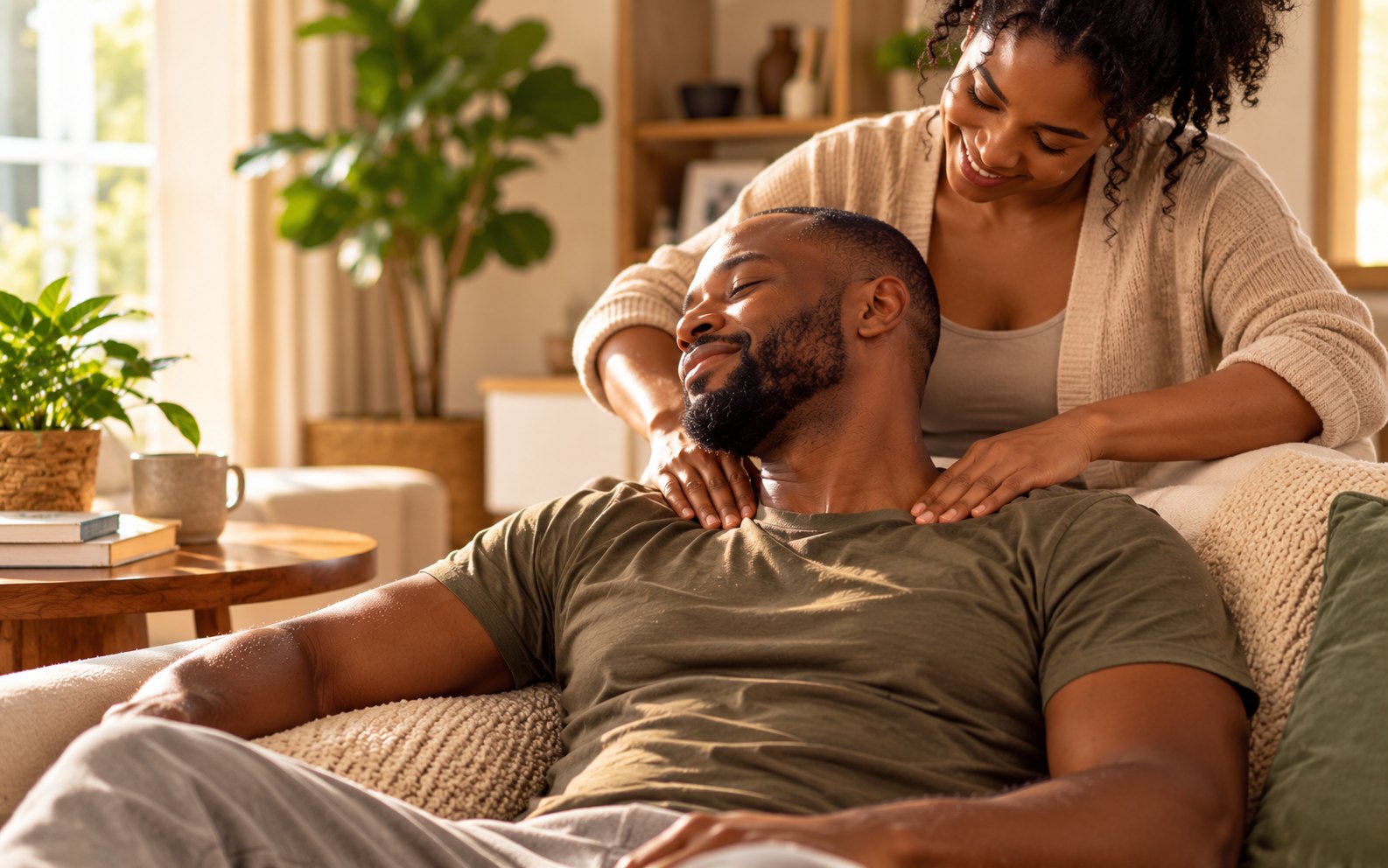
A gentle partner massage starts with permission and a clear agreement about touch. Ask whether your partner would like it, where they feel comfortable being touched and whether they prefer to stay clothed.
The purpose here is a simple moment of comfort between consenting adults. It is not an invitation to treat an injury, copy advanced techniques or press harder until a painful area gives way.
Ask a specific question
“Would you like a brief, gentle shoulder massage?” is easier to answer than beginning without asking. A yes to one area does not mean yes to another, and permission on a previous day does not automatically apply today.
Agree that either person can stop or change their mind. If the answer is no, accept it without asking for justification or trying to persuade them.
Choose a comfortable position
Start with a position the receiving partner already finds comfortable, such as sitting in a supported chair. Stay clothed if that is preferred. Clean hands and a quiet setting are enough to begin; oils, fragrances and equipment are optional.
Choose one agreed area rather than attempting a full-body routine. Keep the first attempt brief, so neither person feels committed to continuing simply because you announced a long session.
Keep touch light and uncomplicated
For an agreed shoulder area, begin with gentle contact through clothing. Use slow, light movements over the soft part of the shoulder. Avoid pressing on the spine, the front or sides of the neck, or any area that is sore, injured or unwanted.
Do NOT use forceful stretching, sudden movements, body weight or deep pressure. If you are unsure about an area or technique, leave it out rather than experimenting.
Make feedback easy to give
Ask “Would you like this lighter?” or “Shall I stop?” Give your partner time to answer. Silence should not be treated as proof that they are comfortable.
The receiving partner can use short directions: “lighter,” “slower,” “another area,” or “stop.” Respond immediately and without defensiveness. The person giving the massage can also pause if their own hands or position become uncomfortable.
Know when to leave massage out
Avoid working on an injury or trying to explain unexplained pain through touch. Stop with pain, numbness, dizziness, nausea or another concerning symptom, and seek appropriate guidance.
If a medical condition makes you unsure whether massage is appropriate, ask a healthcare professional first. A partner massage should not become a substitute for needed care.
Questions about massage between partners
Do we need massage oil? No. Gentle touch through clothing can be enough. If you choose a product, discuss sensitivities and avoid anything that irritates the skin.
What if my partner asks for much firmer pressure? You can decline. Keep within what you can do comfortably and safely; a request does not require you to attempt an unfamiliar technique.
Can I massage a painful knot? Do not assume a painful spot needs deep pressure. Avoid attempting to treat it, particularly if the pain is new or unexplained.
Is this the same as a professional couples massage? No. This article covers informal touch between partners. A professional session has separate service arrangements that must be confirmed with the provider.
Ask about professional massage options
For a professional session with Loving Hands, describe your preferences and location in your enquiry. If you are enquiring for two people, ask what arrangements are available before assuming a simultaneous couples session or package.
Related reading: What to Expect from a Mobile Massage Appointment in Abuja; Choosing a Massage Session for Your Recovery or Relaxation Goals.
Source for general massage suitability and precautions: Massage Therapy What You Need To Know, NCCIH — https://www.nccih.nih.gov/health/massage-therapy-what-you-need-to-know