Choosing between Thai Yoga Massage and a table-based massage is not a choice between a “serious” session and an “easy” one. They are different formats. The better fit depends on how you want to receive the work, how much movement you want in the appointment, your pressure preferences and any relevant limitations.
Massage therapy is an umbrella term for many techniques. Two services can both be massage while feeling quite different in practice. Understanding the setup helps you make a clearer request.
Clothing and contact
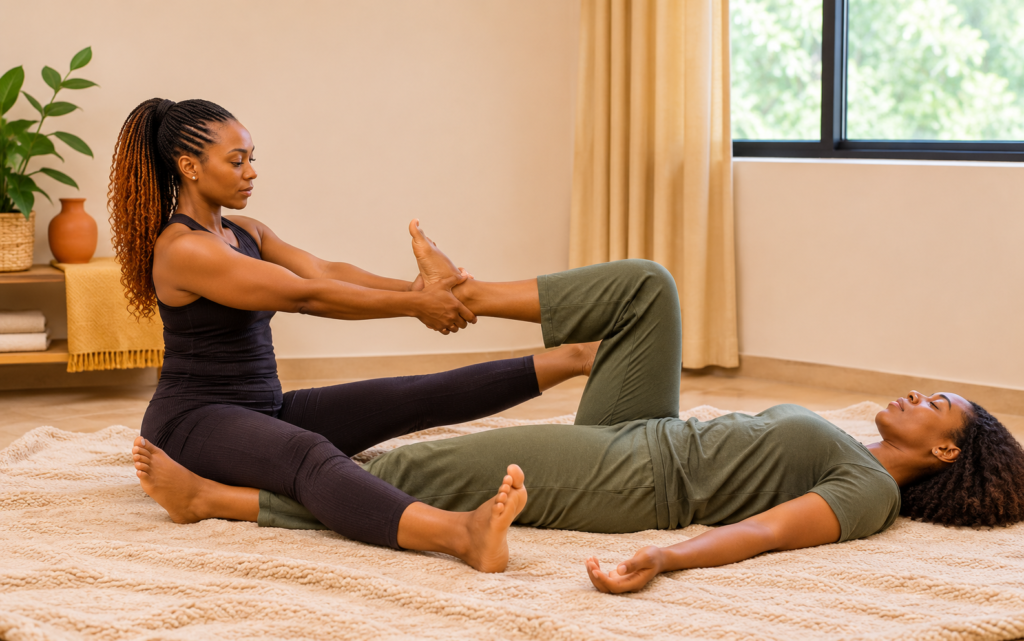
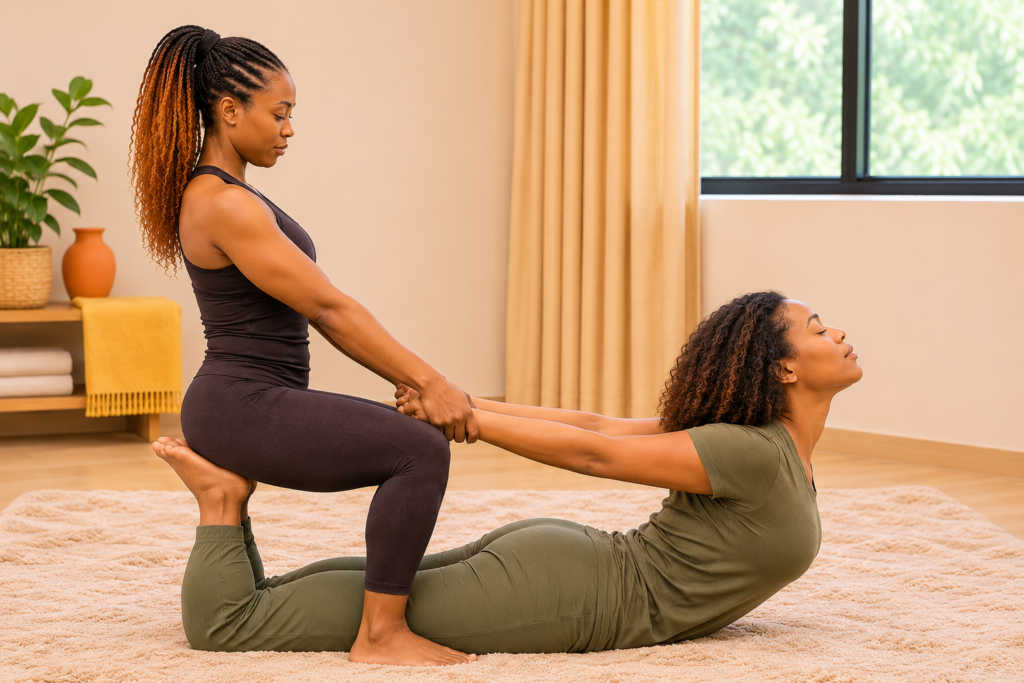
Thai Yoga Massage is generally received in comfortable clothing. The therapist works through the clothing and may use compressions, supported positions and assisted movement. Oils are not the centre of the format.
Many table-massage formats involve direct work on agreed areas, with appropriate coverage and, where relevant, a massage medium. Confirm the exact format of the Loving Hands service you are considering before booking.
Neither format gives automatic permission to work everywhere. Areas, boundaries and preferences should be discussed. You can ask questions before the session and change your mind about a technique or area during it.
Stillness and movement
A table massage often allows the client to remain in one position for longer while the therapist works around the table. Position changes may still be needed, and supports can be used to improve comfort.
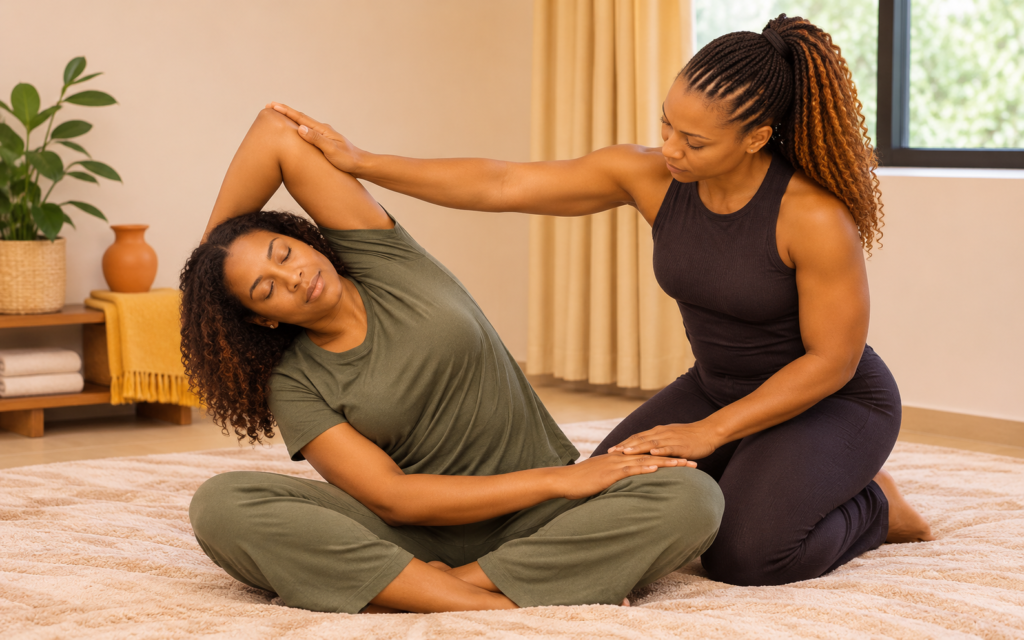
Thai Yoga Massage usually asks for more position changes and more participation in guided movement. Participation does not mean effort in the way an exercise class does. You may be asked to turn, bend a joint, extend a limb or allow the therapist to support its weight.
If changing position is tiring, painful or unsuitable, say so before the appointment. A table format may be easier for some people, while others enjoy the clothed, movement-based nature of Thai Yoga Massage. Suitability cannot be decided from the service name alone.
Pressure is not a simple dividing line
People sometimes assume Thai Yoga Massage is always strong and Swedish massage is always light. That is too neat. Pressure can be adjusted in both formats, and technique matters as much as force.
Deeper pressure is not automatically appropriate. Pressure should match the technique, area, client preference and relevant health considerations, and discomfort should prompt a check or adjustment. NCCIH notes that harmful effects from massage appear uncommon, but rare serious events have been reported, with some involving vigorous massage or people at increased risk of injury. That is one reason to share relevant health information and speak up about pressure.
A preference for firm pressure can be considered, but it still has to fit the chosen technique, the area being worked on and the client’s circumstances. “Firm but comfortable” is a more useful conversation than asking the therapist to push as hard as possible.
The pace and atmosphere
Thai Yoga Massage can have a patterned rhythm: compression, pause, movement, repositioning. The client may be more aware of how one part of the body connects to the next because the session includes guided changes of shape.
Table massage can feel more continuous and still. Swedish Relaxation may use an unhurried pace for general rest. Sports or Deep Tissue may spend more time on selected areas. Stress Relief is a longer, rest-centred massage. Executive Reset is a separate three-part package: assisted stretching, sauna, then full-body massage focused on the client’s agreed priorities. The two are different offers, not simply different lengths of the same massage.
These descriptions are guides, not guaranteed sensations. A good consultation matters because two people booking the same service may have different goals and limits.
Practical setup for a mobile appointment
Both services require an agreed location with enough safe working space. Loving Hands serves agreed homes, hotels and offices in Abuja; it is not a walk-in studio.
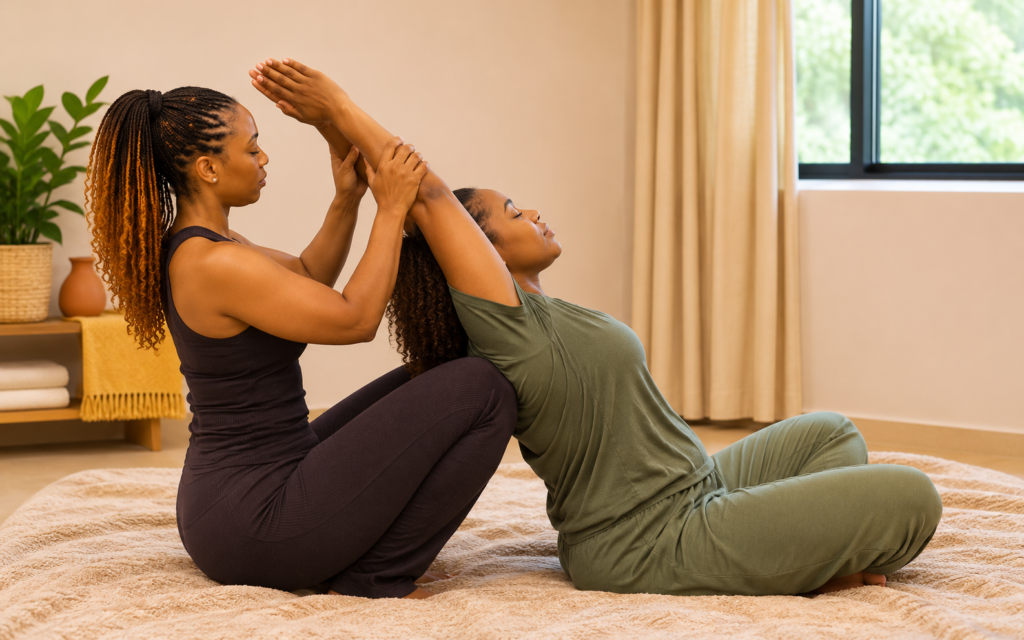
For Thai Yoga Massage, clear floor space and freedom to move around the working area matter. For table massage, the therapist needs room to set up and move around the table. In either case, reduce clutter, arrange building or hotel access, and protect the appointment from avoidable interruptions.
How to choose
Thai Yoga Massage may appeal if you prefer to remain clothed and like the idea of supported movement alongside pressure. A table massage may suit you if you want more stillness, oil-based work or sustained attention to agreed areas while lying on a massage table.
Your health history, comfort with positions and current symptoms also matter. If you have severe, worsening, or unexplained symptoms, seek appropriate clinical care rather than asking a massage therapist to provide a diagnosis.
Loving Hands currently offers Thai Yoga Massage for 75 minutes at ₦60,000. Other table-based services have their own durations and prices on /services/. Submitting /book/ sends a request only. Location, suitability and therapist availability are reviewed before direct payment instructions, and an appointment is final only after verified payment and written confirmation.
Frequently asked questions
Is Thai Yoga Massage done on a table?
The setup is different from a standard oil-based table massage and needs clear working space for clothed, guided movement. The exact mobile setup is on a mat on the floor and is confirmed for the agreed location.
Which option is better for someone who wants to stay still?
A table-based massage may be the more natural starting point, although positioning and suitability still need discussion.
Is Thai Yoga Massage always stronger than Swedish massage?
No. Pressure can be adapted in both formats, and more force is not automatically better.
Can I ask for help choosing?
Yes. Use the contact page and share your goal, pressure preference, relevant limitations and preferred location.
Related reading
- Choosing a Massage Session for Your Recovery or Relaxation Goals
- Services
- How to Prepare Your Home or Hotel Room for a Massage